
February 10, 2026/
No Comments
Winter commercial roof inspection helps detect leaks, drainage issues, and freeze-thaw damage before costly repairs escalate.
Commercial Roofing Services
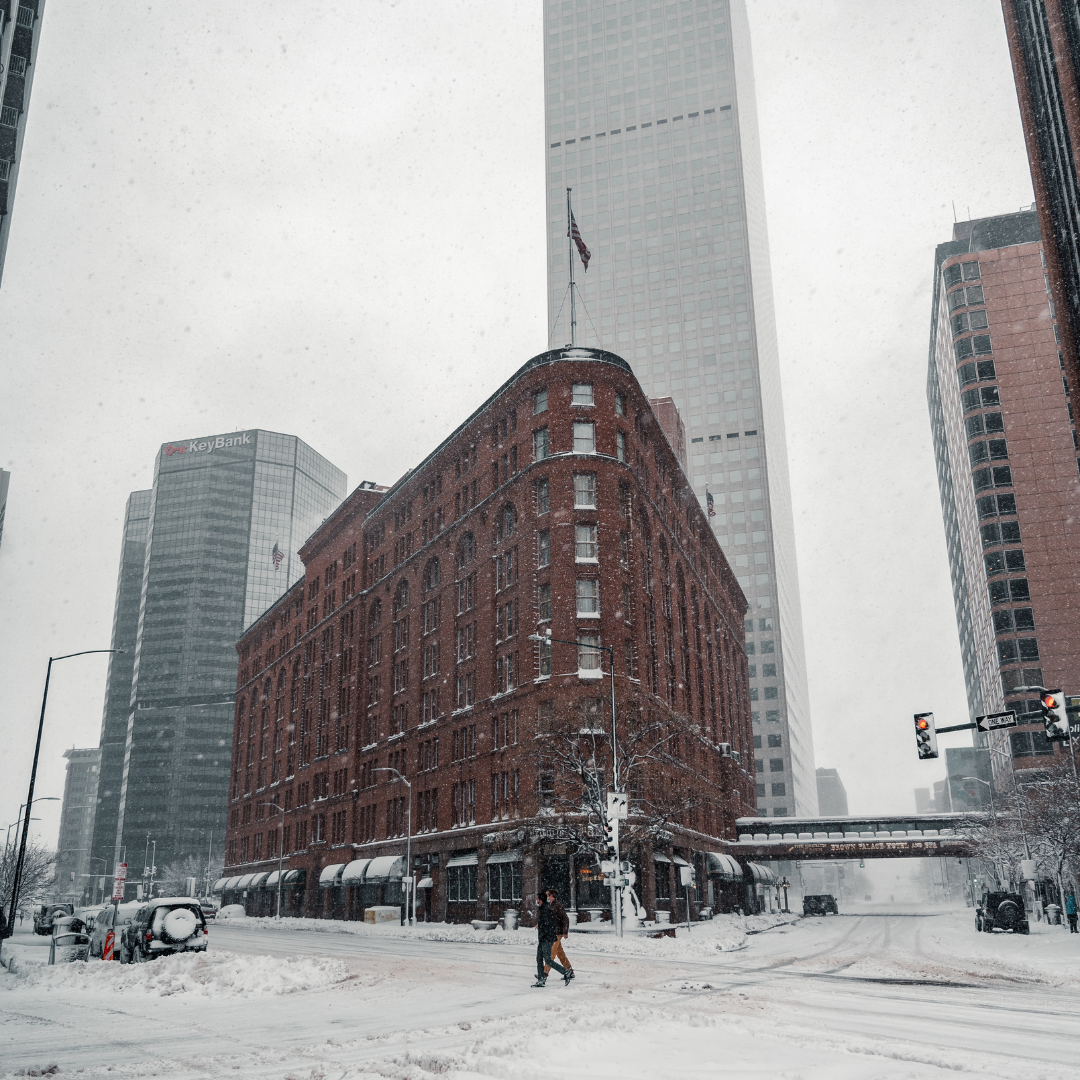
A practical guide to how winter roof inspections help commercial property owners identify risks early, reduce freeze-thaw damage, and avoid unplanned repairs across New York, New Jersey, and Connecticut.
15 Minutes
February 10, 2026
Winter places commercial roofing systems under some of the most extreme stress they experience all year. Snow accumulation, ice formation, and repeated freeze-thaw cycles quietly expose vulnerabilities that often remain hidden during warmer months. For property owners and managers, these conditions can turn minor roof issues into costly emergency repairs if left unchecked.
A winter commercial roof inspection helps identify risks early—before leaks, drainage failures, or structural damage escalate. In this guide, we explain why winter inspections matter, what they uncover, and how proactive evaluations help commercial properties across New York, New Jersey, and Connecticut avoid unplanned repairs and operational disruption.
The Northeast Winter is not simply a “slow season” for commercial roofing. In the Northeast, it is one of the most revealing and damaging periods in a roof’s lifecycle.
Cold temperatures, snow accumulation, ice formation, and repeated freeze–thaw cycles place commercial roofing systems under conditions they will not experience at any other time of year. As a result, winter often exposes weaknesses that remain hidden during warmer months.
A winter commercial roof inspection allows owners and property managers to identify these vulnerabilities while conditions are actively stressing the system, rather than discovering them after interior damage has already occurred.
One of the most destructive forces acting on commercial roofs in New York, New Jersey, and Connecticut is the freeze–thaw cycle.
During the day, snow and ice melt slightly as temperatures rise. At night, that moisture refreezes. This constant expansion and contraction places stress on roofing materials, seams, flashing details, and penetrations.
Over time, this process can:
Widen existing membrane seams
Loosen or fracture flashing details
Create micro-cracks in membranes and coatings
Compromise termination points and edge metal
A winter inspection focuses on these stress points while they are actively failing, rather than months later when damage has already progressed beneath the surface.
The accumulation of snow does more than add weight to a roof. It also highlights drainage problems that may go unnoticed during rain events.
Blocked or slow-draining roof drains allow melting snow to refreeze, forming ice dams and localized ponding areas. These conditions increase the likelihood of leaks, especially around seams, penetrations, and low-slope transitions.
During a winter commercial roof inspection, technicians can:
Verify that roof drains remain functional in cold conditions
Identify areas where snow melt refreezes repeatedly
Detect low spots where water cannot properly evacuate
Install or adjust drain flags to maintain winter visibility
Addressing drainage issues during winter helps prevent sudden interior leaks during late winter thaws and early spring rainstorms.
Many commercial roofing materials respond differently to cold temperatures. Membranes become less flexible, sealants stiffen, and older materials lose elasticity altogether.
As a result, winter conditions often reveal seam separations and flashing failures that remain concealed in warmer weather. These failures may not immediately leak but often allow moisture to enter the system slowly.
A winter inspection evaluates:
Membrane seams under thermal stress
Flashings around HVAC units, skylights, and roof curbs
Expansion joints affected by contraction
Sealants that have become brittle or detached
Identifying these issues early allows for targeted repairs before minor separations turn into active leaks.
One of the most overlooked aspects of winter roof inspections is their impact on capital planning.
Minor deficiencies identified during winter frequently worsen once temperatures rise. Water that enters the roof assembly during winter freeze–thaw cycles often becomes active leakage during spring rains.
By inspecting during winter, building owners and managers can:
Address small repairs before they escalate
Avoid emergency service calls during peak spring demand
Plan repairs or phased work instead of reacting to failures
Protect interior finishes, equipment, and operations
In many cases, a proactive winter inspection prevents unplanned repair costs and operational disruptions later in the year.
A winter commercial roof inspection is not a visual walk-through or a checklist exercise. It is a targeted evaluation of how a roofing system performs under active winter stress.
Unlike inspections conducted during mild conditions, winter inspections focus on the components most likely to fail when temperatures drop, materials contract, and moisture cycles between frozen and liquid states.
Cold temperatures significantly affect how commercial roofing membranes behave. Materials such as EPDM, TPO, PVC, modified bitumen, and BUR systems all respond differently to winter conditions, but each becomes more vulnerable at seams and transition points.
During a winter inspection, technicians assess:
Seam separation caused by thermal contraction
Stress cracking or membrane fatigue
Open or weakening lap joints
Signs of moisture intrusion beneath the membrane
These issues often remain dormant during summer months. However, winter-focused inspections catch them while they are actively forming, allowing repairs before water migrates into insulation or decking layers.
One of the most critical components evaluated during a winter commercial roof inspection is drainage performance.
Snow and ice conceal drainage failures, while repeated melting and refreezing accelerate deterioration around drain bowls, scuppers, and low points.
Inspection teams assess:
Drain functionality in freezing conditions
Ice buildup restricting water flow
Evidence of recurring ponding beneath snow cover
Areas where water refreezes overnight
Drain flags are often installed or adjusted during winter inspections to improve visibility, making it easier for maintenance teams to monitor drainage performance throughout the season.
Among the most common sources of winter leaks are flashings and penetrations. As materials contract in cold weather, these details experience movement that can break seals or loosen fasteners.
Winter inspections focus on:
Flashings at HVAC units, skylights, and roof curbs
Pipe penetrations and conduit seals
Parapet walls and termination bars
Transitions between roof sections or elevations
Even minor flashing failures can allow moisture to enter during freeze–thaw cycles, where it expands and worsens the condition over time.
While insulation is not always visible during a winter inspection, experienced inspectors look for indirect signs of moisture infiltration.
These include:
Soft or spongy roof areas
Heat loss patterns near penetrations
Ice formation patterns suggesting trapped moisture
Interior indicators tied to roof areas
Identifying moisture early is critical. Wet insulation loses thermal performance and accelerates membrane failure, often leading to larger repair scopes if left unaddressed.
Commercial buildings are designed to move, especially during temperature extremes. Expansion joints absorb this movement, but winter conditions place them under significant stress.
Inspections assess:
Joint covers and seals
Separation or cracking at joint interfaces
Signs of water infiltration at movement zones
Failures at expansion joints often remain hidden until they cause widespread interior leaks, making winter inspections especially valuable for early detection.
Skipping a winter commercial roof inspection rarely feels like a decision—it often feels like a delay. However, in Northeast climates, that delay carries real and measurable consequences.
Winter does not pause roof deterioration. Instead, it accelerates it. When inspections are deferred until spring, small and manageable issues often evolve into larger failures that are more disruptive, more expensive, and harder to control.
Most commercial roof failures do not begin as catastrophic events. They start as minor deficiencies—slightly open seams, stressed flashings, compromised sealants, or slow drainage.
During winter, these issues are repeatedly exposed to freeze–thaw cycles. Moisture enters small openings, freezes overnight, expands, and widens those openings incrementally. By the time warmer weather arrives, what was once a minor repair may now involve saturated insulation, deteriorated decking, or widespread membrane failure.
When inspections are skipped:
Repairs shift from planned to reactive
Emergency response costs increase
Repair scopes expand beyond the original issue
Emergency repairs are rarely cost-efficient. They are often performed under time pressure, with limited scheduling flexibility, and during peak seasonal demand.
One of the most costly aspects of skipping winter inspections is that roof failures often remain invisible until interior damage occurs.
Water that enters the roof system during winter may not immediately present as a leak. Instead, it can migrate laterally within insulation layers or refreeze before reaching interior finishes. When temperatures rise or spring rains arrive, that trapped moisture suddenly becomes active.
Common downstream impacts include:
Stained ceilings and damaged drywall
Electrical and mechanical system exposure
Mold risk in concealed spaces
Damage to inventory, equipment, or tenant spaces
At that point, repair costs extend well beyond the roof itself.
For commercial and institutional properties, roof failures rarely occur in isolation. They disrupt operations.
Leaks can affect occupied office space, manufacturing floors, classrooms, or common areas. In some cases, access must be restricted until repairs are completed, creating downtime and tenant dissatisfaction.
Additionally, water intrusion introduces safety and liability concerns:
Slip hazards from interior leaks
Compromised fireproofing or insulation
Electrical hazards near penetrations or equipment
Winter inspections help reduce these risks by identifying vulnerabilities before they escalate into operational problems.
Many property owners delay inspections in an effort to control short-term costs. Ironically, this approach often produces the opposite outcome.
Without winter inspection data:
Capital planning becomes reactive
Repair budgets become unpredictable
Emergency expenditures increase
By contrast, winter inspections provide early visibility into roof conditions, allowing owners and managers to forecast repairs, phase work strategically, and avoid surprise expenditures during peak seasons.
When winter issues go unaddressed, they often surface simultaneously across multiple buildings in spring.
This creates several compounding challenges:
Contractor availability becomes limited
Repair timelines extend
Pricing becomes less flexible
Properties that identify and address issues during winter are better positioned to schedule repairs proactively rather than competing for emergency service when demand spikes.
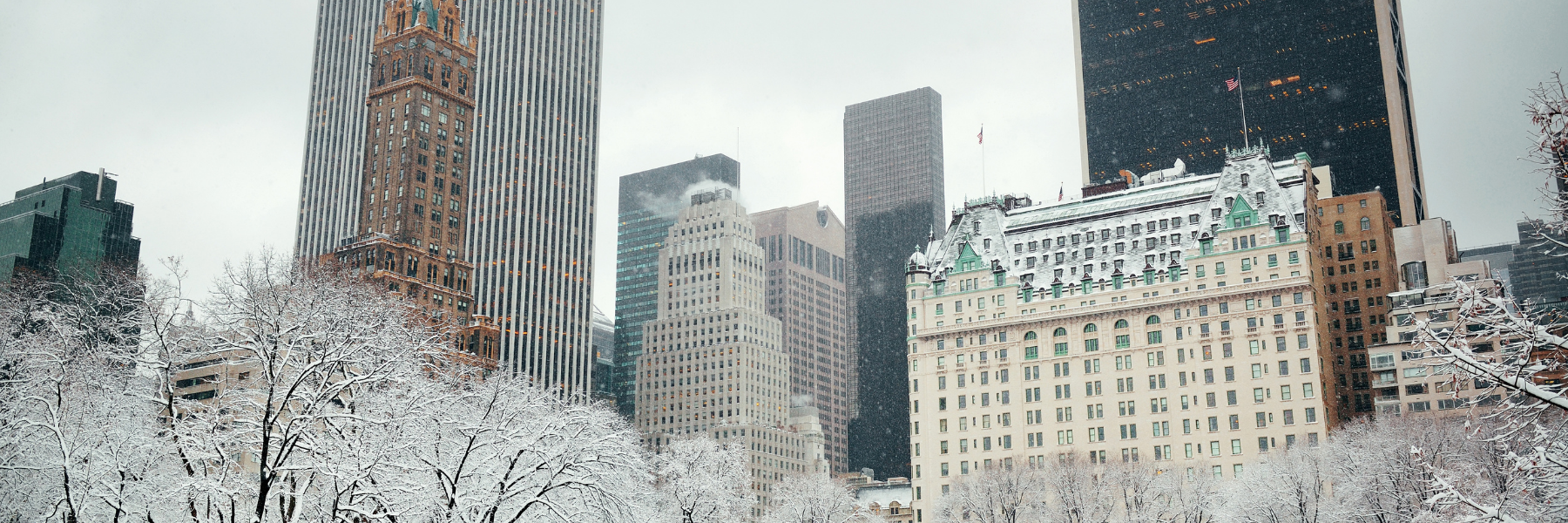
Winter conditions affect commercial roofs everywhere—but in the Northeast, the combination of climate patterns, building stock, and roof design significantly increases exposure to damage.
Properties across New York, New Jersey, and Connecticut experience a unique mix of environmental stressors that make winter roof issues more frequent, more severe, and more costly when left unaddressed.
Unlike regions with consistently cold winters, the Northeast is defined by temperature volatility.
Daytime temperatures often rise above freezing, only to drop sharply overnight. This constant fluctuation forces roofing materials to expand and contract repeatedly over short periods of time.
Over the course of a single winter, this cycle can:
Fatigue roof membranes and seams
Loosen flashing attachments
Accelerate cracking in aging materials
Increase moisture migration within the roof assembly
These conditions cause roof systems to deteriorate faster than in markets with more stable winter temperatures.
Most snow events in the Northeast are rarely isolated. Snow accumulation is often followed by partial melting, rain, or sleet—then rapid refreezing.
This pattern creates several high-risk conditions:
Added structural load from snow and ice
Ice formation around drains and penetrations
Water trapped beneath snow that repeatedly freezes and expands
Even well-designed roof systems can struggle under these repeated stresses if drainage and seams are not closely monitored.
Much of the commercial building inventory in the Northeast was constructed decades ago. While many roofs have been repaired or replaced over time, older buildings often include:
Legacy roof systems
Multiple roof layers
Complex penetrations added over years of modifications
These conditions increase the likelihood of weak points that become exposed during winter stress.
Winter inspections help identify how these older systems are performing now—not how they were intended to perform when installed.
The Northeast has a high concentration of flat and low-slope commercial roofs, particularly in office, industrial, and institutional properties.
These systems rely heavily on proper drainage. When drains become obstructed by snow or ice, water has limited paths to exit the roof.
Repeated freeze–thaw cycles at low points accelerate:
Membrane degradation
Seam failure
Insulation saturation
Winter inspections focus on confirming that these systems continue to function under real winter conditions—not just during ideal weather.
Winter commercial roof inspections are not limited to emergency situations. In many cases, the timing alone makes an inspection both practical and financially responsible.
Understanding when winter inspections provide the most value helps owners and property managers act proactively instead of reactively.
Major snowstorms and ice events place immediate stress on commercial roofing systems. Snow load, combined with partial melting and refreezing, increases pressure on membranes, seams, and drainage points.
After these events, inspections help:
Verify that drains remain functional
Identify ice-related damage around penetrations
Confirm that snow load has not compromised weak areas
Even if no interior leaks are visible, post-storm inspections often reveal early warning signs that would otherwise go unnoticed.
Some of the most damaging roof leaks occur not during winter, but during thaw periods.
As temperatures rise, snow and ice melt rapidly. Water that entered the roof system during winter freeze–thaw cycles suddenly becomes mobile. Without prior inspection, this is often when interior leaks first appear.
Scheduling an inspection before thaw conditions helps:
Identify winter-related vulnerabilities
Address issues before melting accelerates damage
Reduce emergency calls during spring rain events
This timing is especially valuable for properties with known drainage challenges or aging roof systems.
Roof systems with a repair history require closer monitoring during winter.
Previous repairs—especially temporary or localized fixes—may respond differently to cold temperatures and repeated movement. Winter inspections allow technicians to assess whether those repairs are holding under stress.
This is particularly important for:
Roofs with recurring leak locations
Buildings with multiple penetrations or rooftop equipment
Properties that have undergone renovations or system modifications
Winter conditions provide a real-world test of these areas.
As roof systems age, their tolerance for thermal stress decreases. Sealants stiffen, membranes lose flexibility, and fasteners loosen more easily.
For roofs approaching mid-life or end-of-service life, winter inspections help:
Determine whether targeted repairs are sufficient
Identify signs of broader system fatigue
Inform near-term budgeting and planning decisions
Rather than waiting for visible failure, inspections provide early insight into how much useful life remains.
Winter inspections are most effective when integrated into an ongoing maintenance program.
Rather than treating winter as a pause, proactive owners use it as an evaluation period. Inspections during winter complement spring and fall assessments by showing how the roof performs under the harshest conditions.
This approach supports:
Better long-term planning
Fewer emergency repairs
More predictable maintenance costs
For commercial property owners and managers, roof decisions are rarely isolated maintenance items. They are capital decisions that affect budgets, reserves, and long-term asset performance.
Winter commercial roof inspections provide data at a time when many portfolios lack visibility. That information allows owners and managers to make informed financial decisions instead of reacting to failures.
Without a winter inspection, many roof-related risks remain theoretical. Conditions may exist, but they are not quantified or documented.
A winter inspection converts those unknowns into actionable information by:
Identifying active and emerging deficiencies
Documenting their location and severity
Clarifying which issues require immediate attention and which can be monitored
This clarity allows decision-makers to prioritize work logically rather than responding to the most visible or disruptive issue first.
Emergency roof repairs rarely align with budgets. They are unplanned, time-sensitive, and often more expensive due to labor availability and material logistics.
Winter inspection findings allow owners and managers to:
Schedule repairs in advance
Bundle related work efficiently
Avoid peak-season emergency pricing
Even when repairs are necessary, the ability to plan them reduces both cost and operational disruption.
Capital planning relies on accurate forecasting. When roof conditions are unclear, forecasting becomes conservative at best—or inaccurate at worst.
Winter inspections support better forecasting by:
Identifying near-term repair needs
Highlighting medium-term system concerns
Helping estimate remaining service life
This information supports reserve planning and reduces the likelihood of unexpected capital expenditures later in the year.
Not every issue identified during a winter inspection requires immediate replacement. In many cases, targeted repairs can significantly extend system life.
By addressing small issues early, owners can:
Reduce moisture infiltration
Limit insulation degradation
Slow membrane fatigue
Over time, this approach preserves roof performance and delays full system replacement, improving return on investment.
For owners and managers overseeing multiple properties, consistency matters.
Winter inspections create standardized data across a portfolio, allowing teams to:
Compare roof conditions between buildings
Prioritize capital allocation objectively
Align roofing decisions with broader asset strategies
This portfolio-level visibility is difficult to achieve when inspections are deferred or performed only after failures occur.
A winter commercial roof inspection is only as valuable as the methodology behind it. Hayden’s approach is designed specifically for active winter conditions, where visibility is limited, materials behave differently, and small issues escalate quickly if overlooked.
Rather than a generic inspection checklist, Hayden’s winter inspections focus on real-world performance, targeting the failure points most common during Northeast winters.
Winter conditions change how commercial roofs fail. Hayden’s inspections prioritize the areas most likely to deteriorate during freeze–thaw cycles, snow load, and ice formation.
This includes a detailed evaluation of:
Roof membranes and seams under cold-temperature stress
Flashings and terminations exposed to contraction and movement
Penetrations, curbs, and rooftop equipment interfaces
Parapet walls and edge details vulnerable to ice buildup
The goal is to identify early-stage separation or stress, not just active leaks.
Hayden’s winter inspections assess how the roof manages water when snow, ice, and refreezing are present, not just during rain events.
Drainage-related inspection items include:
Roof drains and scuppers for blockage or ice restriction
Evidence of ponding beneath snow cover
Low points where melting snow repeatedly refreezes
Drainage paths affected by rooftop equipment or debris
Where necessary, drain flags are installed or adjusted to maintain visibility throughout winter conditions, allowing for ongoing monitoring.
Many winter roof failures do not immediately present as interior leaks. Instead, moisture enters the roof system, freezes, and expands—worsening conditions silently.
Hayden’s inspections are designed to identify:
Early leak paths before water reaches interior spaces
Areas where moisture may be trapped within the assembly
Conditions that could activate during late-winter or spring thaw
By identifying these risks early, property owners can address issues before they escalate into interior damage, tenant disruption, or emergency response.
Winter inspections require specialized access planning and safety protocols. Hayden’s service teams are equipped to operate safely in cold-weather environments while maintaining compliance with site-specific requirements.
This includes:
Controlled rooftop access during winter conditions
Awareness of snow load and ice hazards
Inspection methods that do not compromise roof integrity
Safety considerations are built into every inspection, protecting both the building and personnel.
A winter inspection is only useful if the findings are clear and actionable.
Hayden provides documentation that:
Identifies observed conditions and areas of concern
Distinguishes between immediate issues and monitor-only items
Supports informed decision-making for repairs or maintenance
This documentation allows owners and managers to move forward with confidence—whether that means scheduling targeted repairs, planning spring work, or continuing to monitor conditions.
Winter inspections are closely tied to Hayden’s service department and 24/7 emergency response capabilities.
If an issue is identified that requires immediate attention, Hayden can:
Coordinate targeted winter repairs where feasible
Provide temporary mitigation strategies
Support emergency response if conditions change
This continuity ensures that inspections lead to solutions, not unanswered questions.
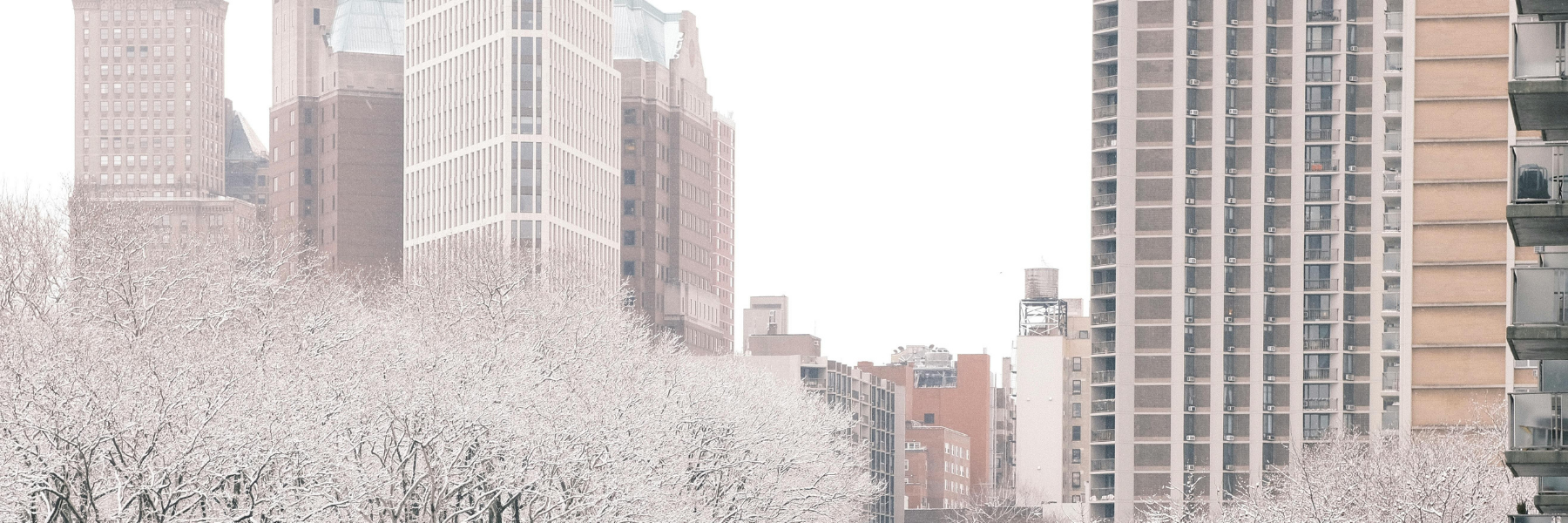
While winter roof inspections provide value across nearly all commercial properties, certain building types and ownership structures benefit the most due to their risk exposure, operational requirements, and budgeting realities.
Understanding where winter inspections deliver the highest return helps owners and managers prioritize action.
Owners managing long-term commercial assets benefit from winter inspections because they provide early visibility into system performance during the harshest conditions.
For CRE owners, winter inspections help:
Protect asset value by preventing accelerated deterioration
Identify risks before they impact NOI
Support informed capital planning decisions
Reduce emergency repair exposure across portfolios
This is especially valuable for owners with multiple properties who need consistent data to compare roof conditions and allocate capital strategically.
Property managers are often responsible for maintaining building performance while minimizing disruption to tenants.
Winter inspections support this responsibility by:
Identifying vulnerabilities before leaks affect occupied space
Reducing tenant complaints and service calls
Supporting predictable maintenance scheduling
Enhancing communication with ownership through documented findings
By addressing issues proactively, managers can reduce operational stress during peak winter conditions.
For industrial and manufacturing properties, roof failures can directly impact operations, equipment, and safety.
Winter inspections are particularly valuable for these facilities because:
Production environments often cannot tolerate leaks
Equipment and inventory may be sensitive to moisture
Downtime carries measurable financial consequences
Identifying risks early allows facility managers to address issues without disrupting operations or production schedules.
Educational and institutional properties often operate continuously throughout winter, with limited flexibility for emergency disruptions.
Winter inspections benefit these environments by:
Supporting safe, uninterrupted occupancy
Identifying issues before classrooms, dormitories, or common areas are affected
Allowing repairs to be planned around academic calendars
For campuses with multiple buildings, winter inspections also provide a consistent baseline for system evaluation.
Buildings with aging roof systems, multiple roof sections, or extensive rooftop equipment face higher winter risk.
Winter inspections help these properties by:
Identifying weak points created by past modifications
Monitoring areas with a history of leaks or repairs
Reducing uncertainty around remaining service life
In these cases, inspections provide clarity where assumptions often fall short.
Winter is often viewed as a pause in building maintenance. In reality, it is one of the most revealing periods in a commercial roof’s lifecycle.
Cold temperatures, snow accumulation, and repeated freeze–thaw cycles actively test roofing systems in ways that warmer seasons cannot. Seams, flashings, drainage components, and penetrations either perform under stress—or they begin to fail quietly beneath the surface.
A winter commercial roof inspection allows property owners and managers to identify risks while conditions are creating them, not months later when interior damage, emergency repairs, and operational disruption force reactive decisions.
By inspecting during winter, owners gain:
Early visibility into developing issues
Greater control over repair timing and cost
Improved budget predictability
Reduced exposure to emergency failures
Most importantly, winter inspections shift roof management from reactive to intentional.
Rather than waiting for leaks to dictate action, proactive inspections provide the information needed to plan, prioritize, and protect commercial assets throughout the year.
Winter conditions place unique stress on commercial roofing systems, often exposing issues that remain hidden during warmer months. A proactive winter roof inspection helps identify developing risks early—before leaks, interior damage, or emergency repairs disrupt operations.
Winter commercial roof inspection helps detect leaks, drainage issues, and freeze-thaw damage before costly repairs escalate.
Learn the early warning signs of commercial roof failure and how proactive inspection can save money, reduce risk, and extend...
Roof, façade & masonry repairs for private schools in New York. Prevent water damage and protect occupied campuses year-round.
Hayden Building Maintenance Corp. is a trusted commercial roofing and waterproofing contractor serving NY, NJ, and CT, since 1973. We specialize in long-term roofing solutions for commercial properties, industrial facilities, and private institutions.
© Hayden Building Maintenance Corp. All rights reserved.